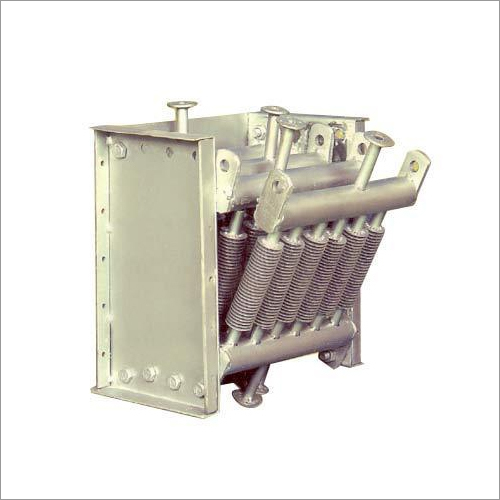
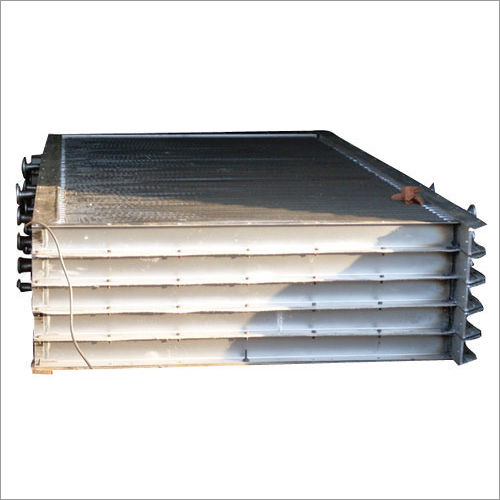
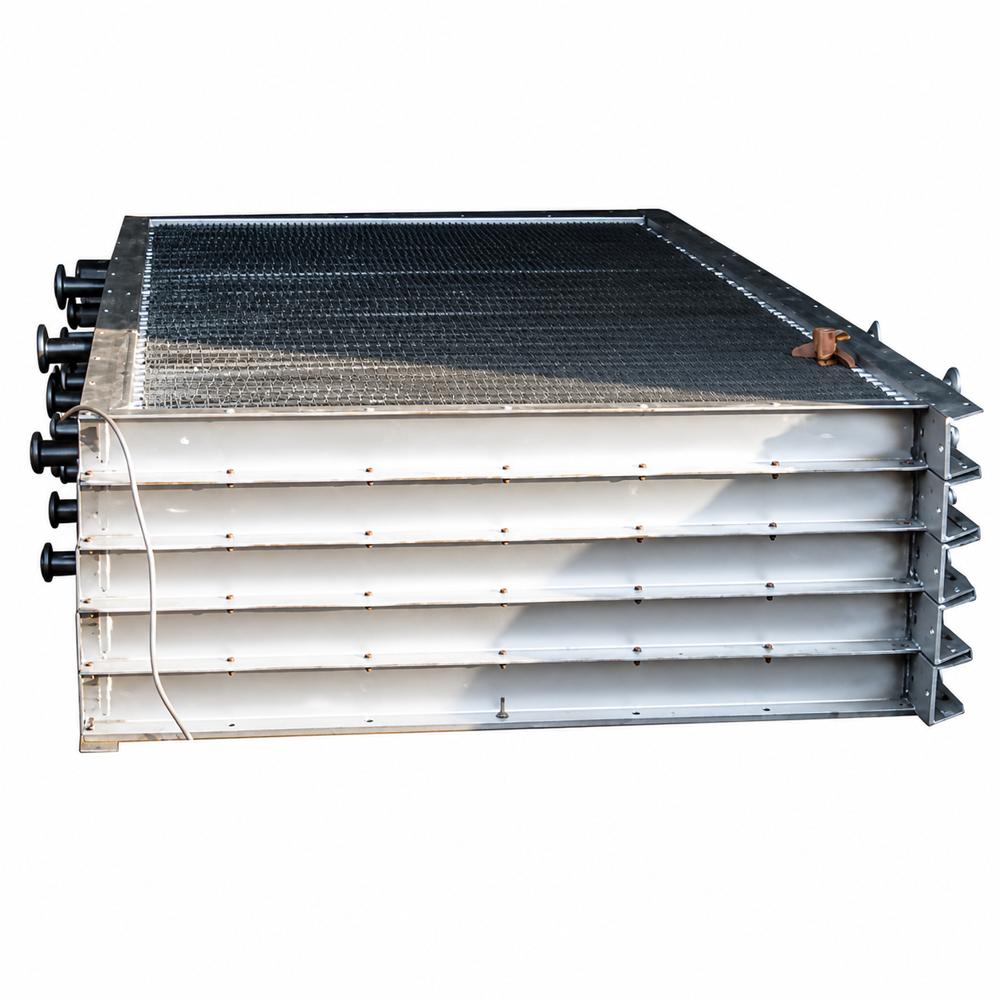
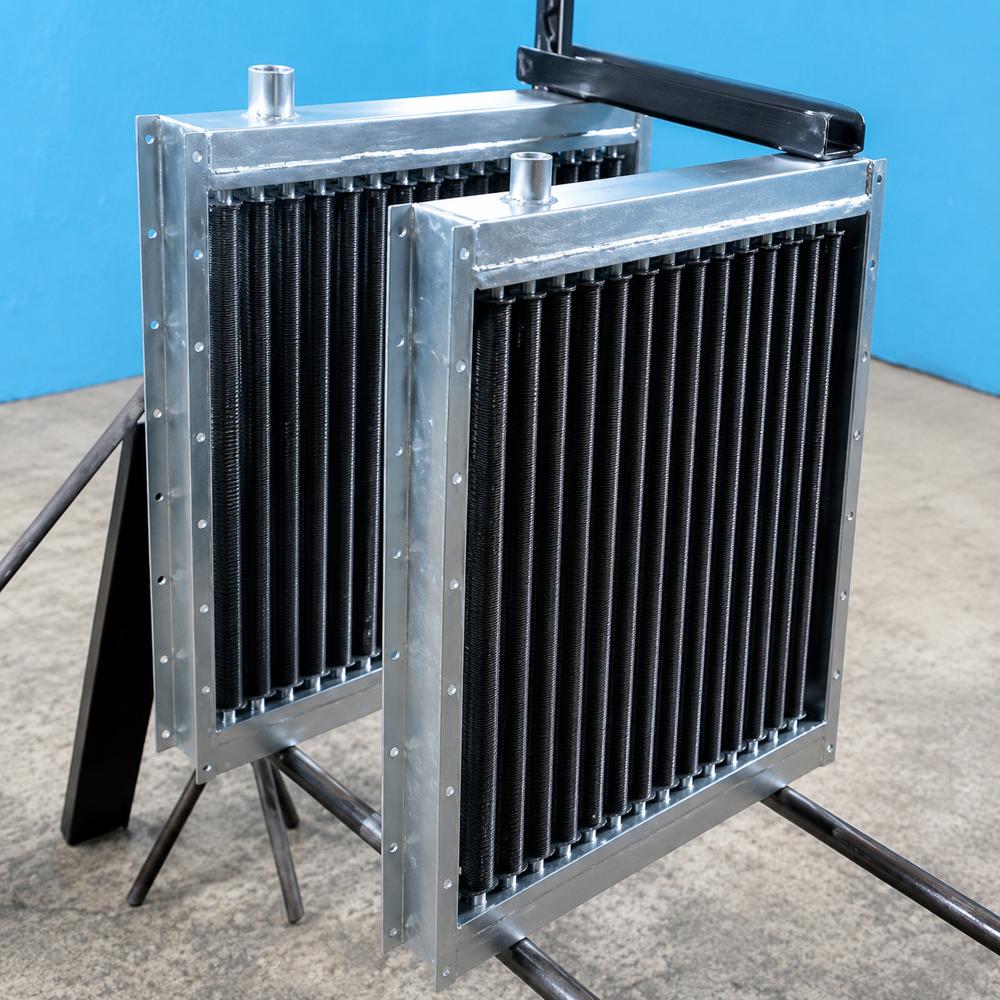
About Single Row Heat Exchanger
Silent Feature:
- Numbers of rows heat exchanger
- Every row open & fitting easily
- Used in helical tension wound tinned tubes
- If you dryers capacity increase & decrease
- Our heat exchanger row can be increase & Decrease
- Duly anti-corrosive paints
- Less steam consumption & drying time
- Hydraulically tested at 300 Psig
Technical Specification:
| Model No |
Dryer Capacity |
Number of Tubes |
Number of Rows |
Steam Consumption KG/HR |
| AE-201 |
8 Tones |
201 |
6 |
625 |
| AE-202 |
12 Tones |
235 |
7 |
750 |
| AE-203 |
16 Tones |
268 |
8 |
850 |
| AE-301 |
20 Tones |
302 |
9 |
950 |
| AE-302 |
26 Tones |
335 |
10 |
1050 |
| AE-401 |
32 Tones |
413 |
11 |
1300 |
| AE-402 |
40 Tones |
451 |
12 |
1400 |
| AE-501 |
50 Tones |
525 |
14 |
1650 |
Enhanced Durability and Corrosion ResistanceThe heat exchanger is designed with copper or stainless steel tubing and aluminum fins, combined with optional epoxy coating or galvanization. These features deliver exceptional resistance against various forms of corrosion, prolonging service life and ensuring consistent operation in HVAC or industrial settings.
Flexible Installation and Versatile ApplicationThis single row plate heat exchanger can be installed horizontally or vertically, offering adaptability for space constraints and system layouts. Its design accommodates a wide range of industrial and cooling process applications, making it a valuable asset for manufacturers and suppliers seeking reliable solutions.
Efficient Performance with Low MaintenanceEngineered for high efficiency, the exchanger supports liquid flow rates up to 2000 L/hr and functions across a temperature spectrum from -20C to 120C. Thanks to its robust structure and protective coatings, maintenance is minimal, which reduces downtime and operating costs.
FAQ's of Single Row Heat Exchanger:
Q: How is the Single Row Heat Exchanger installed in different applications?
A: This heat exchanger can be mounted either horizontally or vertically, allowing flexible integration into various HVAC and industrial cooling systems depending on space availability and process requirements.
Q: What materials are used in the construction of the heat exchanger and why?
A: The tubes are crafted from copper or stainless steel for excellent thermal conductivity and corrosion resistance, while the fins are made of aluminum to enhance heat transfer efficiency. Protective coatings like epoxy or galvanization provide additional durability.
Q: When should I consider using this heat exchanger for my cooling process?
A: This product is ideal when you need reliable thermal management within liquid flow rates of 500-2000 L/hr, working pressures up to 15 bar, and require low maintenance along with durable, corrosion-resistant components for long-term use.
Q: Where can this heat exchanger be applied most effectively?
A: It excels in settings such as industrial process cooling, commercial HVAC systems, and environments demanding efficient heat transfer with robustness against corrosion and minimal maintenance needs.
Q: What is the maintenance process and what makes it low-maintenance?
A: Routine checks ensure system cleanliness and integrity, but the epoxy or galvanized protections, robust materials, and plate structure minimize fouling and simplify cleaning, requiring less frequent and easier maintenance.
Q: What are the main benefits of using this heat exchanger?
A: Key benefits include efficient heat transfer, adaptability to various installation orientations, resistance to corrosive environments, low operational maintenance, and suitable performance in a wide temperature and pressure range.


 Send Inquiry



 Send Inquiry
 Send Inquiry
 Send SMS


